

By Josh Bookbinder
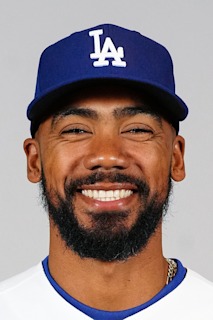
On January 7th, Teoscar Hernandez signed a one-year deal with (shockingly) the Dodgers, staying on the west coast and heading to Los Angeles for a reported $23.5m. $8.5m of that contract is deferred until 2030, and will be paid out in $850,000 increments.
That’s a ton of money for a guy who ended up a relative disappointment for the Mariners last year, putting up career-worst numbers. Not that it matters for the Dodgers and their money-printing business, but let’s take a quick look at why I believe he’s going to be worth the contract he signed.
Run Environments
It’s already been covered a little bit, but the amount that the ballpark change has on Teoscar’s performance is massive, and is the key reason that Teoscar seems primed for a breakout in Los Angeles.
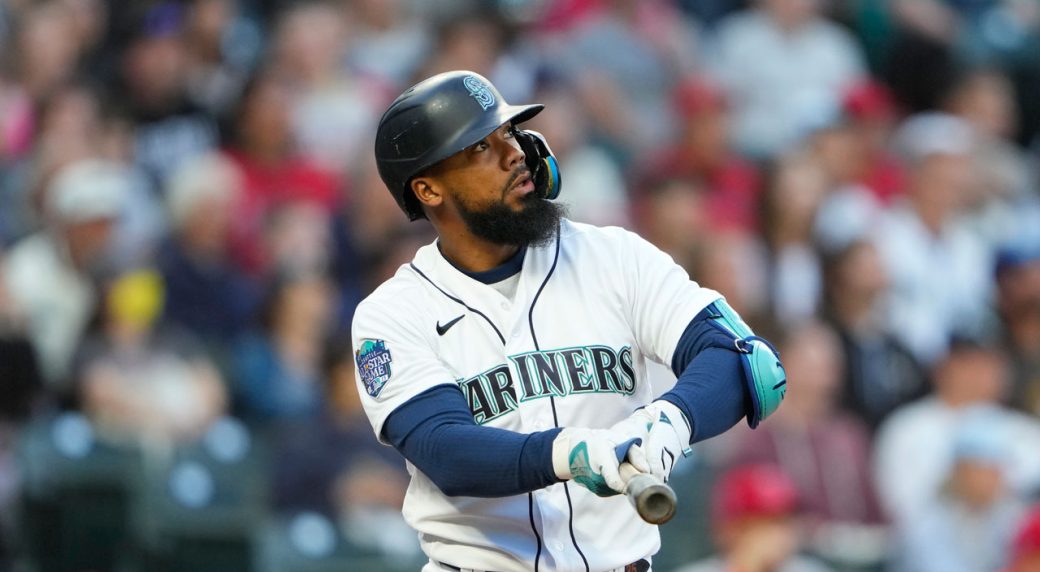
Recently, on a Talkin’ Baseball podcast episode talking about the signing of Hernandez, Trevor Plouffe talked about what it’s like to play in Seattle’s ballpark:
There’s something about Seattle… When you go there, it feels cavernous. Especially as a right-handed hitter, you get up there… it’s a little cold there, the ball doesn’t necessarily fly there… I could see how that could weigh on you mentally.
Trevor Plouffe, Talkin’ Baseball
The effect may be mental, but it’s also proven fact. When we take a look at Statcast’s park factors, we can see that over the last three years, the Blue Jays’ Rogers Centre and Dodger Stadium have overall very similar factors: 100 and 99, respectively. Pretty much league-average. Then we look for the Mariners T-Mobile Park… and we keep scrolling… all the way to dead last in full-time MLB parks with a 92, meaning that it was the worst park to be a hitter from 2021-2023.
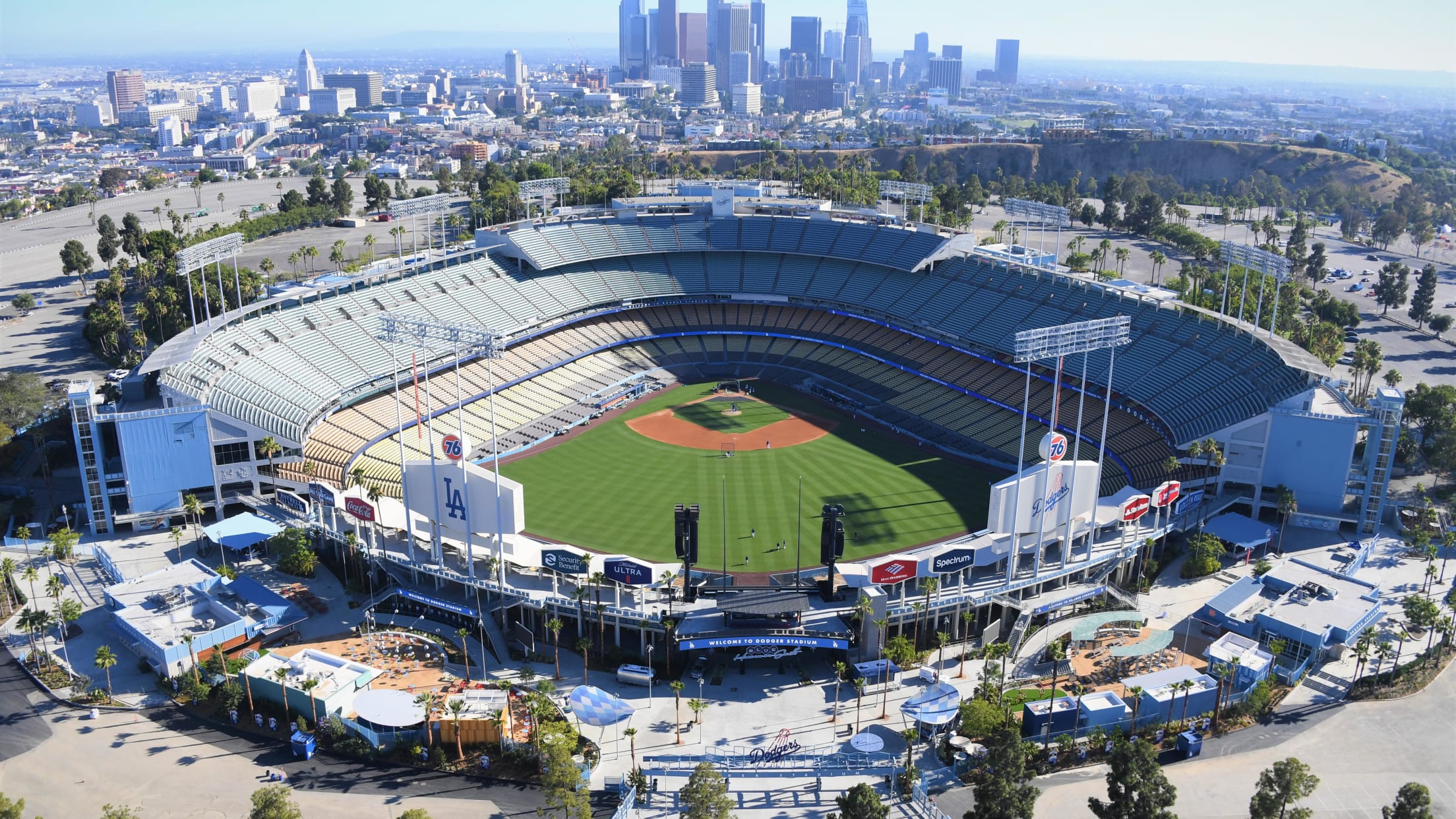
But we can get even deeper than that. Looking at Teoscar’s numbers, most of his value as a player comes from pure hitting and power hitting. He strikes out a lot, doesn’t walk much, and plays average defense. Chavez Ravine is going to do nothing but good for that profile.
When limited to just right-handed hitters, Dodger Stadium is tied for the number one place to hit home runs the last three years, at 126, or 26% better than average. Compare that to 99 (1% worse) for T-Mobile Park in Seattle (or even “only” 111, or 11% better than average at Rogers Centre in Toronto). For righty doubles, Teoscar moves from a 90 environment to a 99; for singles, 92 to 97. In most of the important ways for Hernandez’s profile, he’s moving from a very pitcher-friendly park to about an average one, and for home runs, he’s moving from an average park to quite literally the best place he could be.
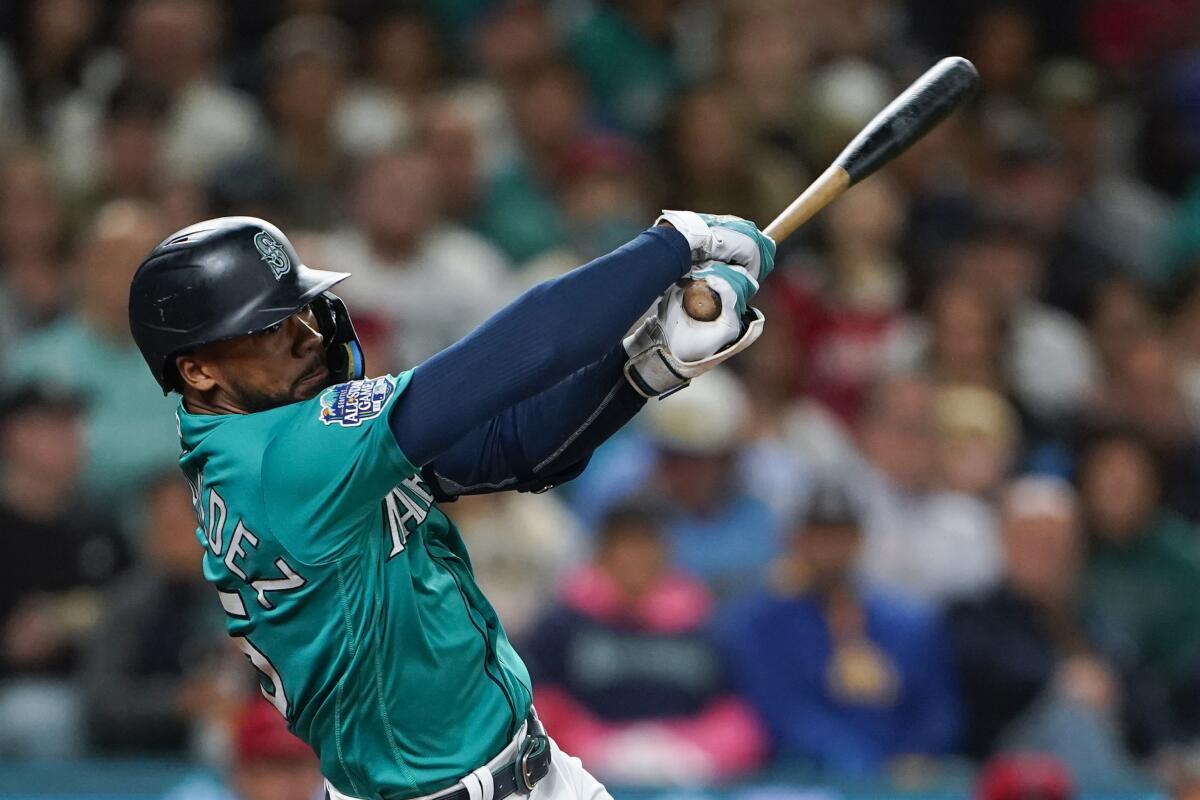
A legitimate question might be whether this makes as big a difference as it’s being presented as, especially because only half of the games a player plays are at home. For Teoscar, it might make all the difference.
Over the course of his career, Teoscar has been a significantly better hitter on the road than at home, as you can see to the right:
| Home | .247/.301/.468/.769 |
| Road | .274/.331/.502/.833 |
However, in ’23 with Seattle, the split was even more pronounced. Teoscar just struggled mightily up in the far northwest, as you can see to the right again:
| TH 2023 Slashline | |
| Home | .217/.263/.380/.643 |
| Road | .295/.344/.486/.830 |
Hernandez was better on the road, as usual, but what’s interesting is that he was far, far better on the road. Each slash number has about a .030 point drop in the career numbers, but somewhere between .080 and .106 in the 2023 numbers. Those numbers are huge, and can be attributed to Seattle’s poor offensive environment. Playing in Dodger Stadium may help to boost that number a whole lot closer to his normal.
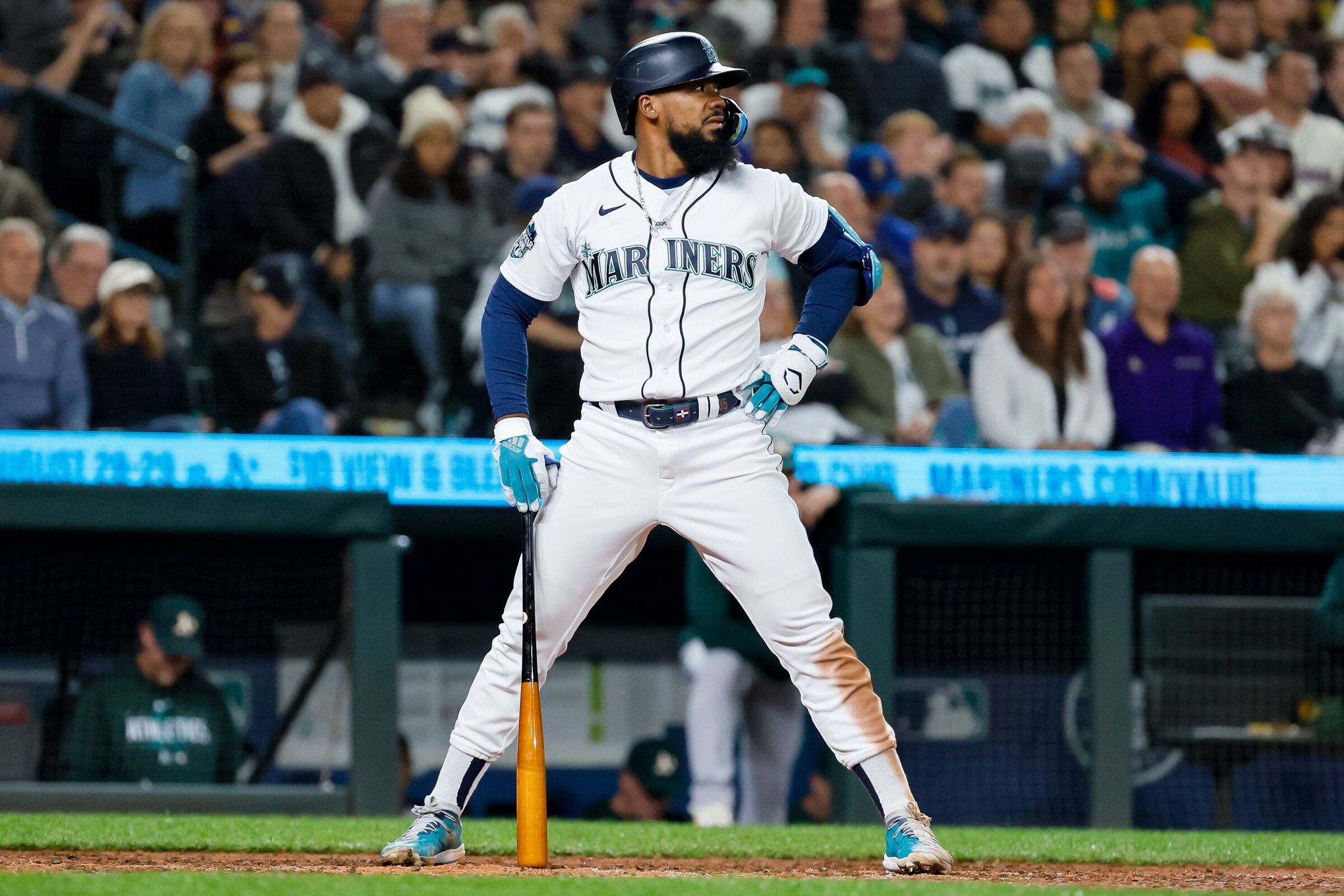
There’s not a whole lot to “if”s, but here’s a fun hypothetical: if Teoscar had put up his career home averages in 2023 instead of his Seattle line, his season slash would have been .271/.322/.477/.799. That’s still a down year for Hernandez, but not nearly the poor year he had.
Why this is can be for a variety of reasons. It could be the feel, as Plouffe mentioned; from the player perspective, all sorts of things could change how you perform. It could be the tangible differences, like the ballpark factors mention, which also help to quantify those intangibles that the players feel that the fans can’t. Or it could be something else entirely, something no one has no idea about until later: even something as simple as not being able to see the ball at a certain ballpark, like Brewers’ stud infielder Willy Adames.
Regardless, the change in scenery projects to make a significant difference for Teoscar moving into his 2024 in Dodger blue. Hopefully, a better home season can help to improve his confidence and help his performance on the road get back to normal, as well.

Pitch Mix and Adjustment
At first glance, Teoscar’s Savant numbers show a little bit of a concerning decline. All of his expected numbers dropped from the prior few years (but they were still well above average). This can be explained by his average exit velocity and max exit velocity both fell, which sometimes are indicative of a decline in ability. However, he’s only 31, which would be very early for a steep physical decline. It’s more likely that these changes are caused by one simple thing: panic.
Teoscar’s chase rate has always been below average, but got far worse in 2023. He went from around a 30% out of zone swing rate in his best Toronto years to over a 35% in Seattle. That’s a significant jump that is also reflected in the changes in the way pitchers pitched him; he saw more breaking pitches than he ever had (41.5% breaking balls — previous high 35%) and performed worse on them than he ever had, producing a combined -16 run value against breaking pitches. However, he mashed fastballs and off-speed pitches.
This can hopefully be improved by two things. One is simple: confidence. One would hope that the shift away from Seattle’s ballpark would help his numbers immediately, and provide Teoscar with more confidence and help him be more patience at the plate. The other is the Dodgers’ typically superb coaching staff and development team, who likely saw something in the positives (like his ability to crush every type of pitch other than breaking balls) that they felt like they could work with. One would hope that they would be able to help Teoscar reinforce mechanically some of the things that made him a 2021 All-Star and a 133 OPS+ player from 2020-2022.
Projections and Comparisons
All things point to Teoscar making some jumps next year as a Dodger. He’ll have ample opportunity with the $23.5m investment Los Angeles has made in him, and as it currently projects that he’ll be a cornerstone in the corner outfield.
I think an interesting comparison to Hernandez might be A.J. Pollock. A split-heavy righty outfielder signed to fill a specific hole in the Dodgers’ lineup in 2019, Pollack actually moved in the reverse direction in terms of ballpark run environment, moving from Arizona’s Chase Field to Chavez Ravine. However, the change was a net positive in home run park factor, and Pollock’s home run rate and totals jumped as the new environment and help from Dodger development teams made his (unfortunately injury-riddled) time in Los Angeles some of the most productive seasons of his career.
/cdn.vox-cdn.com/uploads/chorus_asset/file/23025559/1236039838.jpg)
Pollock in his Dodger home uniform.
Teoscar has the potential to take a similar jump, but he’ll have less time to do it. Pollock signed a 4-year deal, and Hernandez only will be in LA for a season. One would imagine that with all of the money the Dodgers have added to their books, there’s little chance they re-sign him after the season; then again, they don’t seem to be worried about money.
In the fantasy sense, Teoscar is someone to target, but keep an eye on his ADP. There’s a jump to be expected from joining a good team in a massive market, but it still may stay low enough to grab him for a good value pick. He also tends to be a slow starter, so he could be a solid buy-low candidate early in the season, as well. I’d imagine he’d be most valuable in a league that places a high value on home runs, as he’s likely to see a jump in that area of his game.
In a baseball sense, this is a huge get for the Dodgers. There’s been a ton of headlines about, well, the headliners in the lineup that’ll grace the field at the end of Vin Scully Avenue. But the bottom of the lineup had been lacking, and particularly the outfield was lefty-heavy and thin. Teoscar fills a massive need at a low risk due to the single year commitment, and should be someone to keep an eye on moving into the season.
Josh Bookbinder is a writer for and co-founder of LowThreeQuarter. See more of his work and others’ work on the site through the links at the top of the page, or explore another recent article linked below.

What Is Wrong With Jonathan Loáisiga?
Jonathan Loáisiga once showed great promise but has struggled with command and performance since returning from injury. Analyzing his mechanics could reveal paths for improvement and shed light on how players look to improve.


Mike Marshall And The Oddest Cy Young Ever
The article highlights Mike Marshall’s remarkable 1974 season, where he set a record by pitching in 106 games without starting, winning the Cy Young, challenging current relief pitchers’ valuation.

Dream Weaver: The Birth Of A Star (Finally)
By Josh Bookbinder Luke Weaver was supposed to be here, but he also wasn’t supposed to be here. It doesn’t make sense, but it’s right. He’s Supposed To Be Here A decade ago, Weaver was a first-round pick of the Cardinals coming off of incredibly impressive sophomore and junior seasons for the Florida State Seminoles.…

 Low Three Quarter Media
Leave a comment