
By Josh Bookbinder
2023 is the new 1880. Batting average is king and your value as a base ball player is directly tied to how sporting you are.
2023 is the new 1980. Situational hitting, bunts, and stolen bases are king, and baseball is dominated by mid-calf tight pants-wearing stick figures who leave basepaths smoldering in their wake.
Or something like all that, if you look at Chandler Simpson, one of my new favorite prospects.
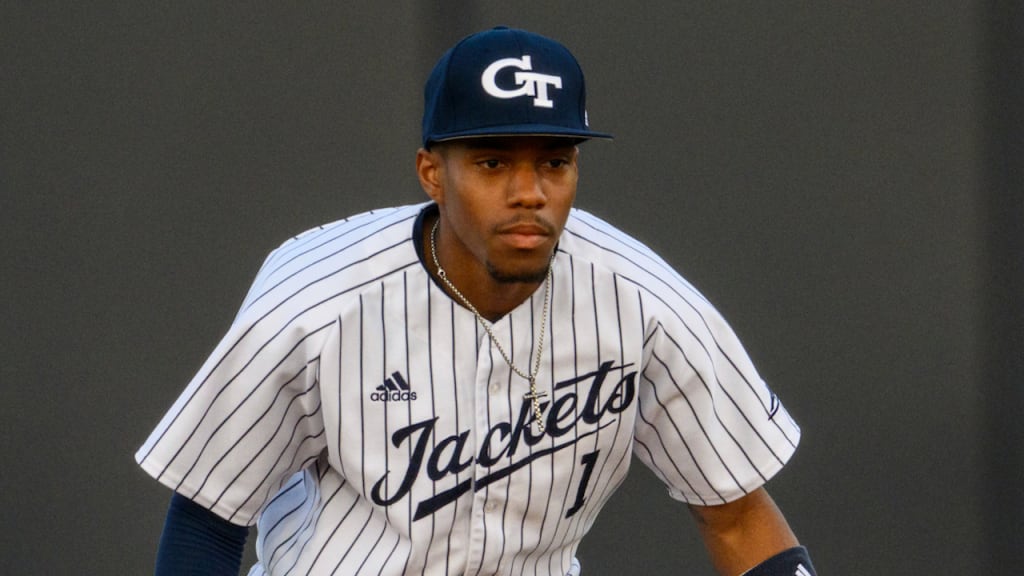
Simpson is an Atlanta prep product who went undrafted out of high school, so he headed to UAB to play. He played well enough in one stunted COVID year, then very well in a full 2021 season. He transferred to Georgia Tech for the 2022 season, where he hit .433, got on base at a .506 (!) clip, and made a few highlight reels for different incomprehensible feats as the Yellow Jacket shortstop. That earned him a second-round pick and bonus from the Rays, who liked what they saw enough to send him to A-ball, and ultimately A+, in 2023.
MLB Pipeline said that “on the traditional 20-80 scouting scale, evaluators joke, he has 90 speed and 10 power“. With that in mind, he unsurprisingly receives 80 grades across different platforms for his speed. However, one of the most important things about that speed is that he is able to use it well.
Most classic evaluating scales have been revised at this point to include “raw” power and “game” power, which is essentially indicative of the difference between a player’s ability to launch balls awe-inspiring lengths in batting practice versus their ability to hit the ball over the fence in games. I’ve long been of the opinion that something similar needs to be in place in terms of speed and baserunning. Great baserunners are not always fast, and players who are fast are not always great baserunners. Therefore, it only makes sense that we have a “game” speed (base stealing, extra base taking, home to first, generally causing havoc) and a “raw” speed (straight line dashes, timed and measured numbers).
Thanks to baseballsavant, we have plenty of ways of measuring baserunners. Kyle Isbel grades out as one of the more valuable baserunners in the sport despite average actual raw speed, while Amed Rosario grades out as very poor despite top-of-the-charts raw speed. While many of these numbers still stay locked for minor leaguers, making amateur prospect evaluation difficult for these purposes, there are some things that still can point in one direction or another for certain guys.
Just like there’s a difference in Miguel Sano (raw only) and Aaron Judge (raw and game) for power, there’s a difference between guys who can do it in theory and can do it in game. It’s about time we start finding the difference between a garden-variety burner who can’t do it on the field versus a Lou Brock or Rickey Henderson.
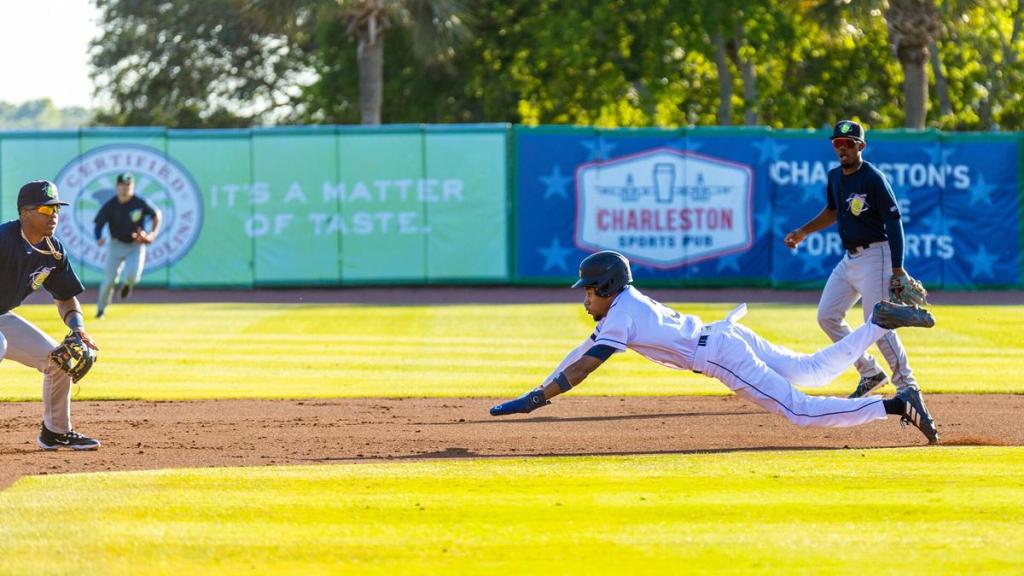
In Simpson’s case, there’s a lot pointing to legit running tools. He’s a very smart kid, and views baserunning as a skill to develop both mentally and physically. He stole 94 bases this year at an 86% success rate, well over what you would expect someone with as high a total number to have. And he has been swiping bags efficiently since college, only having been thrown out 7 times in his college career. There’s no reason to believe that the “game” speed is any different than the “raw” speed in this case.
Simpson also has one of the most important skills a base-stealer can have: he can hit. He’s been given a 60 future hit grade by multiple evaluators, and in his first taste of pro ball was able to hover around a .300 batting average. Even more importantly, he was able to get on base at a .379 rate, which bodes extremely well for him moving forward. The best way a speedster can create problems for other teams is by finding his way on base, and it’s clear that Simpson is able to do that.
I’ve focused heavily on two tools so far: speed and hitting. There are other tools, too, and I haven’t forgotten. Simpson’s fielding grades out as average, his arm the same. Personally, I am more optimistic; a lifelong middle infielder, he’s only recently been moved to the outfield full-time. He has the tools to do more than just stick there, and good player development could get him to a really intriguing place. Luckily for him (and unluckily for everyone else), he’s a Ray, and Tampa Bay has a great development reputation for a reason. His power is non-existent, and has been for a long time; he had one college home run to his name, and that doesn’t look to change any time soon. Even most of his extra base hits seem to be more based on his speed than the bat, and especially so since he’s moved to pro ball. But for an outlier player like him, it doesn’t particularly matter.
This brings us to the “dead-ball baseball” thought about Simpson. In the dead-ball era, league-average OPS numbers typically hovered in the .600s and team stolen bases were between 1 and 2 a game. As the ball livened and the players focused more on power than anything else, we’ve gotten to a point where average OPS is above .700 and team stolen base numbers would be lucky to finish above 0.75 a game, even after rule changes forced more action on the basepaths.
Simpson’s projections seem way more in line with the dead-ball era. His OPS should hopefully sit around the high-.600s to low-.700s, with an abysmal slugging number driving them down. He hits for average and finds ways on base, and then causes absolute havoc when he gets there. So far in pro ball, he alone is stealing bases over a 0.8 a game clip, and also seems to take extra bases and advance in an old-school way.
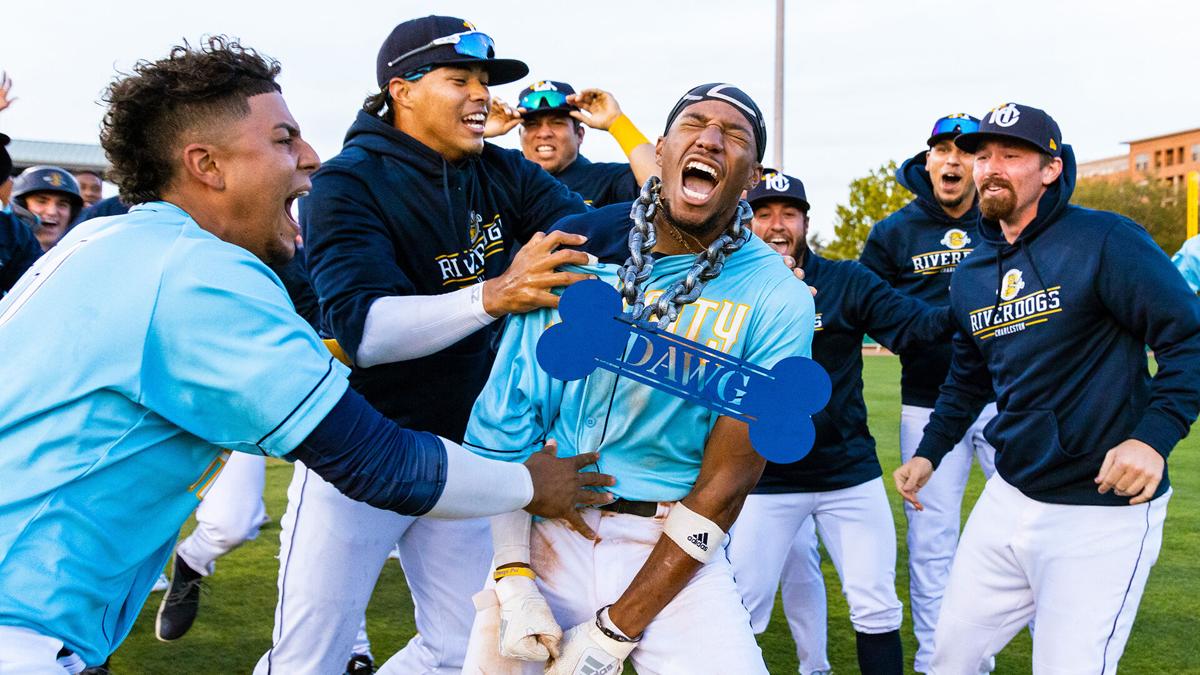
He’s a fun throwback player who likely will find his way onto the Rays somehow over the next couple of years, albeit in what capacity is uncertain. Given the Rays’ fondness for what only can be described as gadget players, I wouldn’t be surprised to see Simpson up a little before he’s truly ready just to provide some speed in certain situations. But beyond that, I think that his unique ability set will play at the next level, and play in a way that is really fun to watch. I’m looking forward to seeing him in the big leagues soon.
Check out the author, Josh Bookbinder, on Twitter or Instagram.

 Low Three Quarter Media
Leave a comment